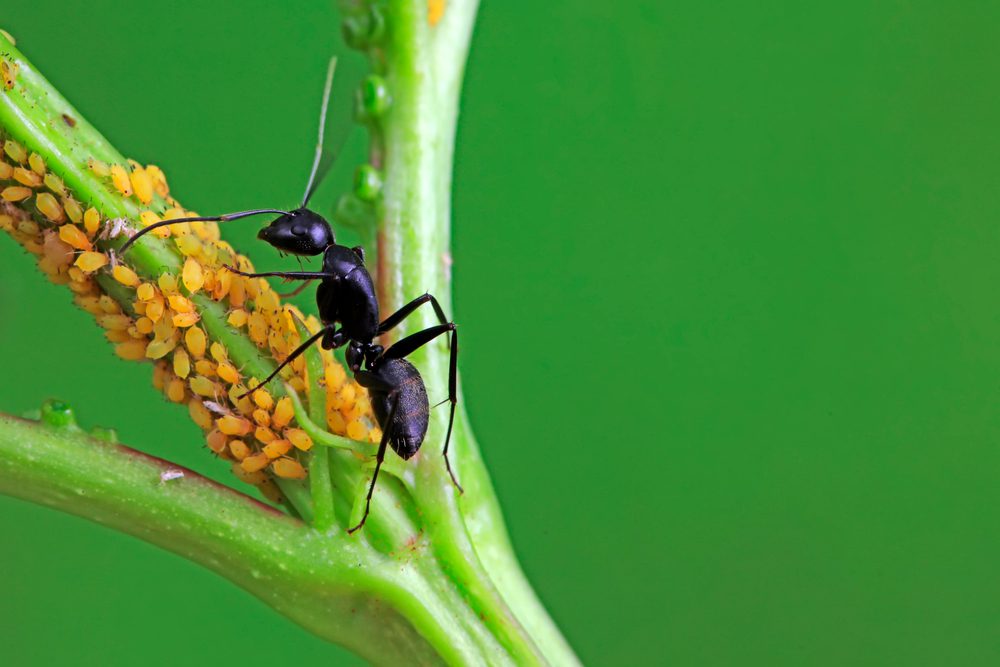
Summers, particularly in Maryland, are accompanied by the usual suspects: heat, humidity, and time spent outside pulling weeds or chasing kids around the yard. During July and August, Marylanders have a new pest appearing in shaded patio areas, beneath mulch beds, and even inside, the Asian needle ant.
Unlike most household ants, the Asian needle ant is capable of stinging, and more than that, with significant pain. Their venom has also been known to trigger severe allergic reactions such as anaphylaxis. As their numbers continue to spread throughout the Mid-Atlantic, Asian needle ants pose a serious problem for homeowners in Maryland, and one that should not be taken lightly.
Here’s how to identify them, what the danger is, and why bringing in the experts is the best course of action.
What’s the Asian Needle Ant and Why Now?
The Asian needle ant (Brachyponera chinensis) is an invasive ant that was first spotted in the U.S. almost a hundred years ago. Within the last few years, their numbers have grown to infest over a dozen states, including parts of Maryland. The ants prefer moist, shaded areas, the very same conditions present in most backyards throughout the state.
Unlike most ant species, they don’t migrate in lengthy, visible lineages. They travel at a slow pace and tend to scavenge alone, making them more difficult to find until they’ve taken hold. In addition, they displace indigenous ant colonies and thrive in cooler environments, the reason behind their swift progression throughout the Mid-Atlantic.
As reported by CBS News, their venom has led to life-threatening reactions, and their growing presence is both ecologically and medically threatening.
How to Recognize an Asian Needle Ant
Knowing how to identify these ants at an early stage can save one from a serious situation.
Here’s what to observe:
- Size: Approximately ¼ inch long
- Color: Dark brown to black body with light orange or yellow legs
- Antennae: Curved and segmented, rather than the straight ones on certain common ants
- Behavior: Travels alone or in small groups, not in trails
- Habitat: Nests in cool, moist places such as under logs, mulch, stones, and landscaping materials
One dominant behavior of the asian needle ant is that they nest near human activity around foundations, decks, or basements, so homes are a likely target.
PestWorld has listed the Asian needle ant as a high-alert invasive pest for its attack behavior, health threat, and stealthy ability to remain undetected until they stings.
Why Their Sting Is a Serious Medical Concern
The sting of an Asian needle ant is painful, typically reported as burning and sharp. But for others, it can be medically hazardous.
Common symptoms are:
- Redness, swelling, or irritation where the sting took place
- Itching or hives
- Shortness of breath, swelling of the face, or constricting feeling in the throat
- Anaphylaxis, which necessitates prompt emergency treatment
And here’s the troubling part: reactions can get worse with repeated exposure. Even those with no known insect allergy can become sensitized after being stung once. The venom has proteins that can cause rapid-onset allergic reactions, making prevention and early control crucial.
A report in Scientific American verifies that this species has provoked severe allergic reactions in the U.S., particularly during warmer months when they’re most busy.
Why You Shouldn’t DIY This One
DIY sprays and ant baits may be sufficient for routine household ants, but they won’t touch Asian needle ants.
Here’s why:
- Nests are buried deep within soil, mulch, or structural voids
- Colony disturbance can cause it to divide and move elsewhere, making the infestation worse
- Off-the-shelf treatments seldom reach the queen or reproductive hub of the nest
- Misidentification of the species may result in ineffective treatments
At Womack Pest Control, our technicians don’t merely spray and pray; they inspect, detect, and use the best methods of long-term protection. We’ve learned over the decades how ants behave, and we customize each treatment to your specific property.
When To Call The Pros
If you’ve seen strange ants or have been stung close to your home, it’s a good idea to investigate before the colony has spread or someone else is injured.
Call 301-381-8526 or book your inspection online. Our experts will inspect your property, determine whether you have Asian needle ants, and inform you of your choices with no-pressure advice.
Find out more about who we are and why homeowners in Maryland have trusted us since 1943 to treat pests the correct way, safely, efficiently, and with the health of your family as our concern.
In a Nutshell: Be Proactive, Not Reactive
The Asian needle ant isn’t only a new ant in the neighborhood; it’s a stinging, highly contagious pest that is a genuine health and comfort threat. On the bright side, it is controllable if you catch it early.
Womack Pest Control is here to assist you in making that initial step toward a healthy, pest-free home this summer.