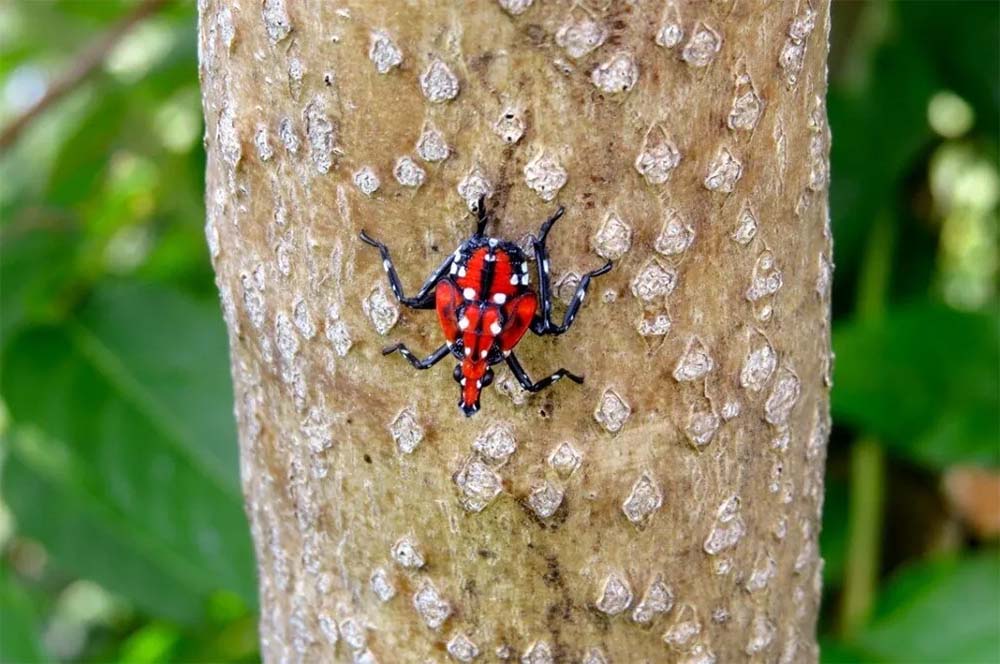
It’s hard to miss the buzz around the Spotted Lanternfly (SLF) these days. If you live in Montgomery County, you’ve probably heard something about this colorful but highly invasive pest. Unfortunately, the concern is real. The Spotted Lanternfly is spreading quickly and causing trouble for trees, crops, and even homeowners.
At Womack Pest Control, we’ve seen firsthand how disruptive this insect can be. Here’s what you need to know and what you can do to help keep it under control.
What Is the Spotted Lanternfly, and Why Should You Care?
The Spotted Lanternfly (Lycorma delicatula) is a leafhopper originally from parts of Asia. It made its way to the U.S. a little over a decade ago and has been moving through the Mid-Atlantic region ever since. In Maryland, it’s now firmly on the radar of local officials and environmental experts.
You can read more about the state’s response to this pest on Maryland’s official plant pest page.
This insect is especially damaging because of the way it feeds. It pierces the stems and trunks of plants and trees to suck out sap leaving behind a sticky mess and weakening the plant over time.
What It Means for Homeowners
While it’s easy to think of this as a “farmer’s problem,” the SLF can be a real nuisance in residential areas too. Here’s why:
- Tree and plant damage: They feed on a wide variety of trees and vines, including ornamentals and hardwoods you might have in your yard.
- Sticky residue: Their waste called honeydew can build up on decks, patios, and cars, leading to mold and attracting stinging insects.
- Fast spread: SLF doesn’t stay put. It’s a hitchhiker and can catch a ride on firewood, vehicles, or even outdoor furniture.
Montgomery County’s environmental services page has more info about SLF and other invasive species threatening local greenery.
How to Identify the Spotted Lanternfly
The SLF has a very distinctive look, but it changes as it matures. Here’s a breakdown of what to look for:
Spring & Early Summer – Nymphs
- First stage: Tiny, black with white spots.
- Later stage: Red with black and white markings. These jump around a lot and can be found on plants or tree trunks.
Spring & Early Summer – Nymphs
- Roughly an inch long.
- Forewings are light gray with black spots.
- Hindwings are red with black and white bands.
- When at rest, the wings fold over the back like a tent.
If you’re unsure, the USDA pest guide has useful photos and descriptions.
What You Can Do About It
Stopping SLF might seem like a big job, but homeowners play a key role. Here are some practical steps you can take:
1. Look for and Destroy Egg Masses
- They resemble smudges of dry mud and are often found on flat surfaces, trees, outdoor gear, fences, etc.
- Use a scraper to remove them and drop them into a bag filled with rubbing alcohol to destroy them.
2. Report Sightings
- In Maryland, sightings can be reported through the Department of Agriculture. Providing a photo and location is helpful to track the spread.
3. Check Before You Move
- This insect is sneaky. It can travel unnoticed on your car, camping gear, or firewood. Always inspect before traveling or relocating items from outdoors.
4. Try Control Methods at Home
- Sticky bands on tree trunks and certain EPA-approved sprays can help reduce the number of SLFs on your property.
- DIY control methods like sticky tree bands and EPA-approved sprays are commonly recommended by pest management professionals, but it’s important to use them carefully and know their limitations.
When to Call a Pro
If you’re seeing dozens or hundreds of these bugs around your yard, it’s time to bring in professionals. The longer they stay, the more damage they do.
At Womack Pest Control, we’ve been serving Montgomery County for decades, and we know how to handle these kinds of infestations quickly and safely.
Get in touch with us or call 301-881-5181 to schedule a service or inspection.
Final Thoughts
The Spotted Lanternfly may be small, but the problems it causes can be big. With a little awareness and some action, we can all do our part to slow the spread. Whether it’s keeping an eye out for egg masses or getting help from a local expert, every step counts.
And remember: the sooner you act, the better your chances of keeping your property safe.