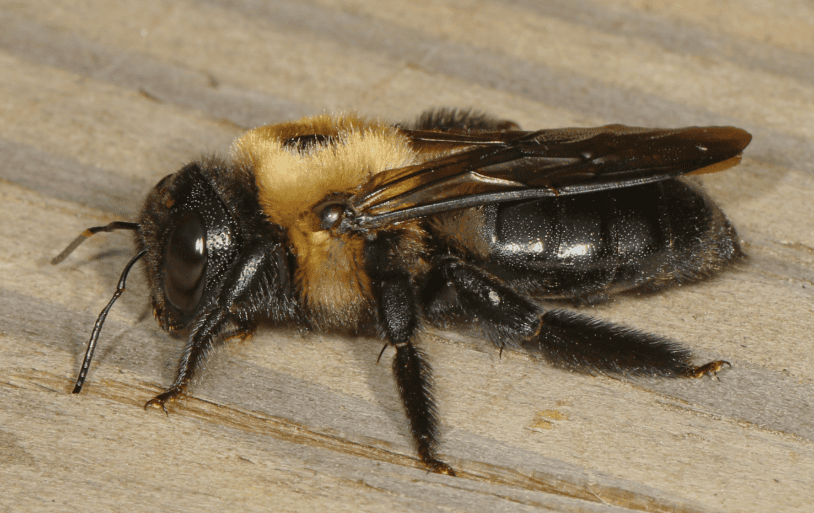
Every summer, we get this common question from Maryland property owners regarding large bees around their porch, deck, or wooden trim. Are they dangerous?
At Womack Pest Control, it is our frequent advice to homeowners that all bees around the house are not necessarily an issue. Some may be bumble bees, which are significant pollinators and usually only stick around gardens and flower beds. At other times, they may be carpenter bees, which can pose a serious threat to your property over time.
The trick here is that they are hard to differentiate just by looking at them. It helps in identifying problems before it becomes costly repairs later.
Why the Difference Matters
When homeowners call us about bee activity around the home, it is usually because not everyone knows what kind of bees they are dealing with, and for that matter they do know if it will be harmful to them or not.
Usually, when homeowners notice small round holes in their deck railing, or sawdust has started collecting beneath an overhang. They become concerned and think that they may be dealing with an insect that can damage their homes. Small details like these often help us figure out what’s really going on.
For example, bumblebees tend to stick to the flowers and the landscaped areas.
However, carpenter bees have different behavior when it comes to exposed wood.
How to Tell Them Apart
It is easy to mistake carpenter bees from a bumblebee because they can look very identical. They are both large and quite active in the warm months of the year in Maryland.
The first thing that we advise homeowners to look out for is the coloration of the abdomen of the insect. While carpenter bees have a shiny, hairless abdomen that is generally black, bumblebees have a furry abdomen that has black and yellow hair.
How the bees behave can also help narrow it down. Bumblebees fly around flowers, gathering nectar and pollen. Carpenter bees tend to hover around wood areas such as:
- Decks
- Porches
- Fencing
- Fascia boards
- Sheds
- Trimmed wooden structures
Why Carpenter Bees Cause Damage
Unlike termites, carpenter bees do not eat wood. They simply drill holes in wood. They use those holes for building nests.
Female carpenter bees drill nearly perfectly round holes of about a dime size in diameter, then make tunnels inside the wood to have egg chambers.
One hole does not seem to be harmful at first glance. The problem is that carpenter bees regularly return to the same places and keep drilling holes there. In most cases, when we inspect houses, we see only a small hole a few inches deep, but it can mean much more underneath.
The repeated activity of carpenter bees can eventually result in weakening the wood and damaging the surrounding area. Several small holes might become the cause of bigger damage, requiring unexpected repair costs.
In our experience, homes with older, untreated, or weathered wood tend to be the most vulnerable.
Signs of Carpenter Bee Activity
As mentioned earlier, the effects of carpenter bees may be hard to spot because the damage occurs gradually.
Some of the signs that we advise property owners to look out for include:
- The presence of large bees near the wooden construction
- Small circular holes in the wooden structure
- Sawdust under the entry points
- Presence of yellow stains near the holes
- Activity of woodpeckers
One of the additional problems that we encounter frequently is woodpecker damage. Once carpenter bees have made their homes in the wood, woodpeckers start pecking the wood to access the larvae.
Why DIY Does Not Always Solve the Problem
We know why a lot of homeowners take matters into their own hands. Purchased sprays and traps might appear to be an easy solution, particularly if the situation does not look serious.
Unfortunately, since the nest of carpenter bees is located within the wood, the treatment on the surface kills adult insects but cannot reach larvae or eggs hiding inside. That is why some homeowners will eventually call us and say they thought they have already solved the problem but find bees returning to the same spot because they failed to realize that untreated nesting sites are still appealing for these bees.
When It Makes Sense to Call a Professional
Every time homeowners reach out to us with these concerns, helping them find the right solution is our priority. It is also important to remember that not every bee around your home is a cause for concern.
We have seen many cases where what looked like a minor issue turned into costly repairs later. That is why early detection matters when it comes to preventing recurring carpenter bee damage.
If you are seeing repeated bee activity around wood or signs of damage, it may be time to schedule an inspection.
At Womack Pest Control, we help homeowners across Maryland identify carpenter bee activity, assess the damage, and address the problem early. If you suspect carpenter bee activity around your home, contact us to schedule an inspection.