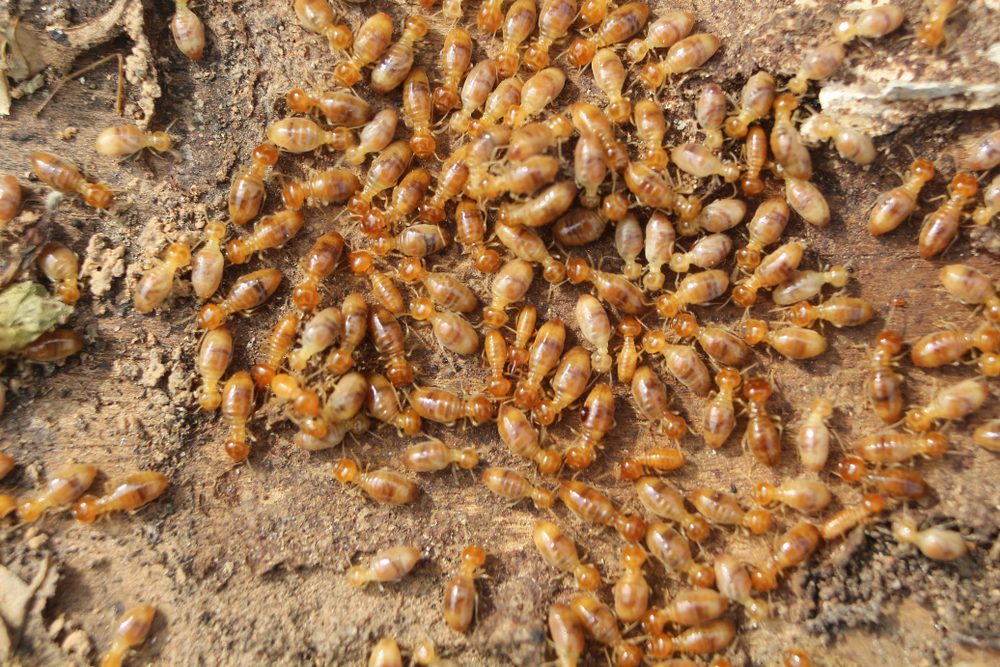
Seeing a swarm usually means termites have been active longer than you think.
In Maryland, the swarm season usually arrives in early to mid-spring, just when the weather is about to turn warm and wet. This is when people living in homes begin to notice flying termites around windows and doors, wondering where they came from.
The thing is, termites do not just materialize in April. By the time swarms appear, the termite colony has already been at work, munching away in the background behind walls, under floors, or along foundations. At Womack Pest Control, we often see infestations that have been active long before homeowners notice any visible signs.
In most cases, your home gives you clues before swarm season hits. You just have to know what to look for.
Why Spring Is Prime Time for Termites in Maryland
In areas like Maryland, warming soil temperatures create ideal conditions for subterranean termites. These are the most prevalent types of termites in our area, and they dwell underground, moving from soil to wood within your home.
According to the National Pest Management Association, termite swarms are the first signs that homeowners notice. However, what most people do not know is that termite swarms are merely a reproductive cycle. It is not the start of the infestation but rather a sign the colony has been there for some time.
That’s why early detection matters.
Pre-Swarm Termite Behavior: What to Watch For
Termites are quiet by nature. They don’t leave obvious trails like ants, and they don’t make noise inside your walls. The signs tend to be subtle.
Here’s what we encourage Maryland homeowners to keep an eye on before swarm season hits.
Mud Tubes Along the Foundation: Subterranean termites create pencil-sized mud tubes to travel from the soil to your home and back again. They use these tubes to stay protected and maintain the moisture they rely on
You may notice them:
- Along the foundation walls
- In crawl spaces
- In basement walls
- Near support piers or beams
If you break one open and see creamy-white insects inside, that’s active termite movement. Even if the tube looks empty, it’s still worth checking. Termites can rebuild quickly.
Soft or Hollow-Sounding Wood: Since termites consume wood from the inside out, the damage may not be immediately visible.
You might notice:
- Hollow-sounding wood
- Bubbling or flaking paint that looks like water damage
- Slight sagging of floors
- Tiny pinholes in drywall
These structural clues are often the earliest signs homeowners notice. However, they can be easily overlooked, especially in older homes. But when wood becomes soft or brittle without an obvious moisture issue, it’s worth a closer look.
Discarded Wings Near Windows and Doors: Before a full swarm occurs, you may find small piles of translucent wings near windows, doors, or light sources.
This is because swarmers are drawn to light, which is why they’re usually found indoors near windows. If you notice wings but no actual bugs, that means the swarm has already taken place, and the colony is likely nearby.
It’s one of the most frequent calls we get every spring.
Doors and Windows Suddenly Feel Tight: This sign will often catch homeowners by surprise.
As termites work their way through wood, they bring moisture and weaken the wood. Frames can start to bow ever so slightly, making doors and windows more difficult to open and close.
It may not necessarily indicate a termite problem, but if this symptom is occurring in conjunction with other subtle indicators, it should not be ignored.
Why Maryland Homes Are at Risk
Termites are active throughout much of the Mid-Atlantic region. Maryland’s climate, with mild winters, spring rains, and soil that is high in moisture, is why we see termite issues every year throughout both the city and rural areas of the state.
Homes with the following features are particularly vulnerable:
- Mulch piled against the home’s foundation
- Poor drainage around the home
- Crawl spaces with high humidity
- Old wood structures that have never been treated
New homes are not exempt from termite infestation either. Subterranean termites live in the ground and can gain entry into a home through an opening as small as 1/32 of an inch.
The Importance of a Professional Termite Inspection
Of course, “finding what looks like termite activity can be overwhelming. However, the goal of an inspection is not to cause alarm but to offer insight.
At Womack Pest Control, a termite inspection includes:
- Careful evaluation of foundations and exterior walls
- Crawl space and basement checks
- Identification of moisture conditions
- Assessment of structural wood components
- Documentation of any visible activity or risk factors
In most instances, what the homeowner believes to be termite damage is actually something else altogether. And if there is termite activity, it is often easier and less invasive to treat early.
Preventative Treatments Before Swarm Season
A smart step many homeowners take is to take action before the swarm season even starts.
Preventative termite treatments are intended to establish a barrier between your home and the soil where the termites reside. This may include:
- Soil treatment around the perimeter of your home
- High-risk area treatment
- Monitoring systems to alert you to potential problems
The goal is simple: prevent termites before they become a problem in your home.
Spring is a time to enjoy your home, not wonder what might be going on beneath it.
A Local Perspective You Can Count On
Years of serving Maryland homeowners have taught us one thing: termite damage usually doesn’t start with a dramatic event. It starts quietly.
Most of the time, homeowners call us because something doesn’t feel right. And that instinct is worth trusting.
If you’ve spotted warning signs or just want the peace of mind of an inspection before swarm season, Womack Pest Control is here to help. Contact us, a quick inspection now can prevent a much bigger issue later.