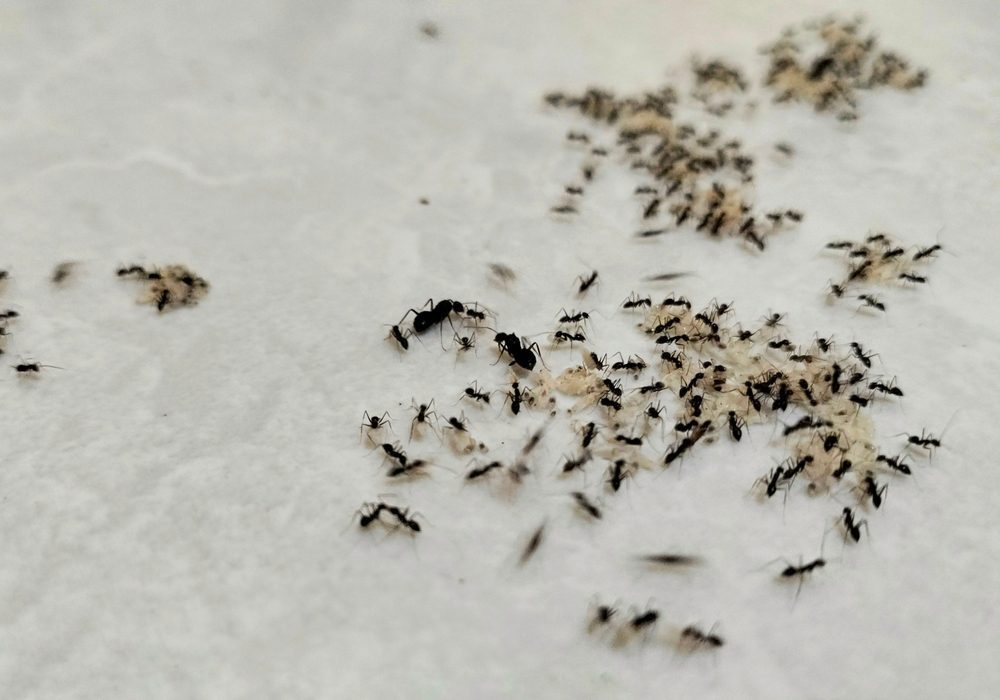
You clean your counters. You use spray on them. You put out a few ant traps. But a few days later, they come right back. Back to the same place. The same route. As if nothing ever happened.
This happens very frequently in Maryland homes, particularly during the warmer season when ants are more active than usual. You’ll typically encounter this issue in your kitchen and bathroom, where it is easier for them to find food and water. Many homeowners try DIY pest control methods first, only to find the ants returning again and again.
Why does this happen? Because most ant invasions aren’t actually addressed at their root cause.
Why You Keep Seeing Ants (Even After You Treat Them)
The ants you see inside your home are only a small part of the problem.
They’re worker ants, sent out from a much larger colony to search for food and water. When those workers don’t return, the colony simply sends more. This happens constantly, giving the illusion of continuous activity even after you apply insecticides.
- Ants Are Following Invisible Trails
Ants do not enter your house by accident. Once one discovers food within your house, it leaves behind a scent trail for others to follow.
These trails act as an insect highway and help to lead the ant straight to the same food source.
Even after you clean or spray, this trail stays there long enough to attract another ant.
- The Colony Is Still Active Nearby
Ant nests are located in the following areas:
- Inside the walls
- Under the floors or cabinets
- Along the plumbing lines
- Near the building’s exterior
As long as the queen is still alive, the problem remains. Colonies can survive and grow for extended periods of time, silently growing despite very few ants being visible indoors.
- Your Home Has What They’re Looking For
Ants are driven by these common things that attract ants to Maryland houses:
- Food: crumbs, food spills, pet food, pantry items
- Water sources: leaking pipes, wet cabinets, humidity
- Hiding places: warm and enclosed spaces within walls or floors
These don’t have to be large to ensure their continuous return. Something minor such as dripping of water under the sink could be a constant source of water for the whole ant colony.
- They’ve Found an Easy Way Inside
There is no need for large gaps for ants to enter your home.
Common entrance points are:
- Cracks in the foundation
- Spaces around doors and windows
- Apertures around utility lines
Once they have found a suitable entrance point, they will continue to use it and establish a path. Failure to seal off these entry points will result in any treatment becoming a temporary solution.
Why DIY Ant Treatments Often Fall Short
Ant sprays work because they kill ants upon contact. But they fail because they aren’t meant to treat deeper threats.
While you may believe the problem has been solved, you’re actually missing part of the equation, causing more worker ants to join in from the source colony.
- They Only Treat What’s Visible
Sprays and wipes usually kill ants on contact, but they don’t reach the colony. So while it may look like the problem is gone, the source is still active behind the scenes.
- They Can Scatter the Problem
Certain types of ants that are found around Maryland will simply split into other colonies if they encounter surface-level pesticides.
Instead of solving the issue, this can spread it, leading to ants showing up in new areas of your home.
- They Miss Outdoor Nests
Many infestations actually start outside. If treatment only happens indoors, ants will continue entering from nests in the soil, mulch, or around your home’s foundation.
- They Don’t Address What’s Attracting Ants
Even if a treatment works temporarily, ants will come back if what was attracting them is still there. Food access and points of entry make a difference in how long ants stick around.
Where Ants Commonly Nest in Maryland Homes
Over the years, we’ve learned that ants tend to settle in predictable places.
Inside the house:
- Hollow walls
- Spaces behind the baseboards
- Below the sinks and cupboards
- Areas around the pipes and heating systems
Outside the home:
- Base of the foundation
- Mulch beds and landscaping areas
- Underneath patios and walkways
- Tree roots and decomposing wood
Most infestations are more advanced than they appear indoors.
What It Takes to Stop Ants for Good
- Target the Colony
That means destroying the colony, and specifically its queen.
By doing this, the cycle ends, making an otherwise temporary solution become permanent.
- Limit What Attracts Them
We help identify and correct the conditions ants rely on, such as:
- Presence of moisture
- Availability of food sources
- Places where ants can find shelter
Doing this reduces the chances of future infestation and also prevents other ant colonies from seeking out places like your home.
- Sealing Their Entrance Points
Closing gaps and cracks makes it harder for ants to get inside in the first place.
Even small fixes can have a big impact. Over time, this helps prevent repeat infestations from the same entry routes.
- Indoor and Outdoor Treatment
Some of the things we do include:
- Treating interior areas where ants have been seen active
- Treating outdoor spaces, especially around the perimeter of the home
This way, you ensure that current activities are minimized, and any future activities are prevented as well.
Why Ant Problems Often Get Worse Over Time
When ant problems keep coming back, it usually means the colony is still active, and the source hasn’t been fully addressed. Over time, this allows the infestation to spread, making the problem more noticeable and harder to control.
You Don’t Have to Keep Dealing With Ants
If you have been dealing with the problem of ants again and again, there may be an underlying cause to your problem. The problem is more than what meets the eye, and needs a more targeted approach.
We provide an effective solution for this problem at Womack Pest Control. Our pest control specialists will examine the area where the ants are coming from. That way, you’re not just dealing with temporary relief; you’re getting a long-term solution.
Contact us today to schedule an inspection and get a clear plan to stop ants from coming back.
Because once that’s handled, you’re not just getting rid of ants, you’re preventing them from returning.