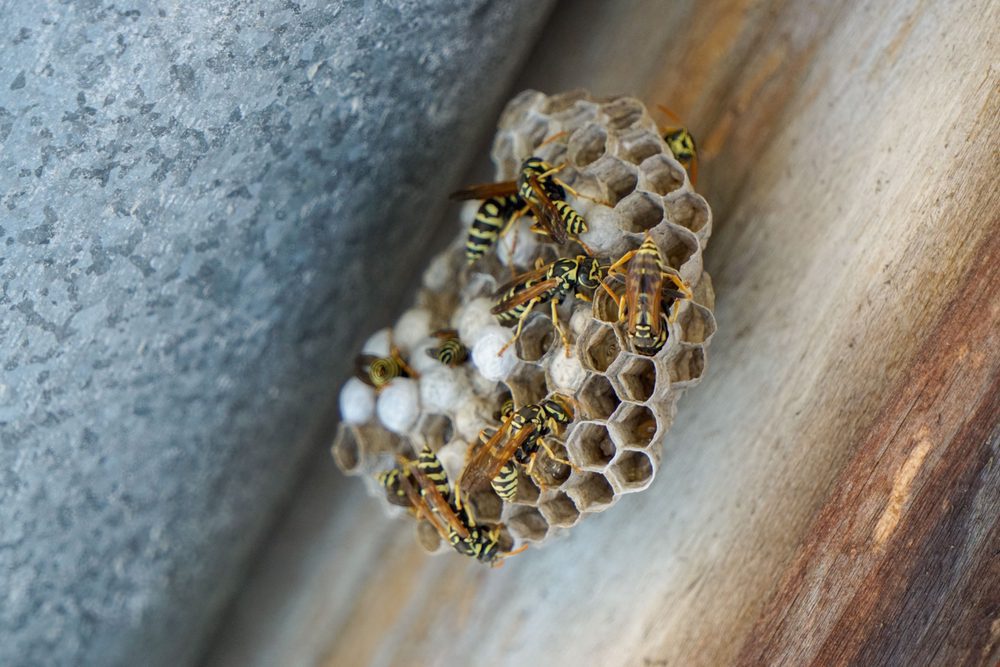
As the temperature rises, many people get ready for the warmer weather by cleaning up patios, doing landscaping work, and spending more time outside in the yard. Regrettably, this period coincides with an increase in stinging insects’ activity levels.
At Womack Pest Control, once the temperature begins rising, the population of wasps and hornets starts growing rapidly due to queens finding spots to build new colonies. After establishing the colony, wasps will continue expanding it until it gets too large.
Fortunately, there are several preventive actions you can take at an early stage to minimize the risks of wasps and hornets building nests around your home. A good pest control strategy always starts with prevention before nesting takes place.
Why Wasps and Hornets Nest Around Homes
Wasps and hornets, like other pests, tend to be drawn to areas that offer protection, food, and water sources.
This combination is frequently available at residential locations, such as roof overhangs, decks, garages, landscape plantings, dining areas, and small openings in structures.
Often, people only become aware that there is an issue once the nest is established. At that time, it may be hard to miss the presence of insects near doors, patios, and other areas where residents gather outdoors.
Therefore, prevention is usually the best way forward.
Common Nesting Areas Homeowners Should Check
Wasps and hornets typically choose places that can offer shelter from rain, wind, and disturbances. There are some nests that will always be obvious but there will also be those that are well concealed within an area that the homeowners may not be aware of.
Some areas where wasps nest usually include:
- Under the roof overhangs
- Near soffits and attic vents
- Under decks or porches
- In sheds and other outdoor storage areas
- Underneath outdoor furniture
- In playsets or other structures in the backyard
- In trees or thick vegetation
Small nests can be easier to deal with at first until the colonies grow towards late summer. Conducting inspection of the exterior area on a routine basis during spring may make things easier.
Landscaping Conditions That Can Attract Stinging Insects
There are ways in which the landscaping around a house contributes to the presence of stinging insects.
Bushes, shrubs, and any other type of vegetation that grows without management may create hiding places for the nests of wasps and other insects, thus protecting their homes from destruction. Also, landscaping that is too close to the house makes it easier for wasps to travel from their nests to food sources.
Flowers always attract various pests because they have nectar in them, which is an essential part of the diet of many insects, even wasps. While pollination is important, large concentrations of flowering vegetation near outdoor seating or entryways may increase insect activity around commonly used areas.
In addition, fallen fruit from trees may ferment in piles, and wasps are attracted to the scent of fermented fruit.
It’s best to trim shrubs, clear yard clutter, and leave room between landscaping and the home.
Outdoor Food Sources Can Draw Wasps Closer
The presence of food sources in the summer is especially attractive for wasps.
Food served during picnics, sugary drinks, food left by pets, garbage cans, and even food leftovers might be the targets for insects looking for sustenance for their community.
Some measures that will prevent activity in outdoor spaces might include:
- Maintaining outdoor eating areas clean after use
- Ensuring that garbage cans are properly closed
- Preventing uncovered food from staying outdoors
- Rinsing spills from sugary drinks
- Storing pet food indoors
Any leftover food could make wasps return to the same spot repeatedly.
Standing Water Can Support Pest Activity
Water sources at your home can also be a factor when dealing with stinging insects.
Birdbaths, backed-up rain gutters, dripping outdoor spigots, water decorations, and sources of standing water could be reliable sources of water for the hot season.
Although water does not directly lead to nest formation, it will certainly be useful for encouraging activity in the surrounding areas.
Proper cleaning of rain gutters, drainage, and repairing outdoor leaks will solve your problem with excess water sources attracting pests.
Seal Entry Points Around the Home
There are some types of wasps that will try to create their nests in more sheltered spots on the home structure such as wall cavities, attics, and crawl spaces.
Small gaps around siding, vents, roof materials, windows, and utilities can allow access into these sheltered areas.
It’s important for homeowners to regularly check for:
- Damage to soffits
- Worn siding
- Gaps around windows and doors
- Vents that aren’t screened
- Pipes that have gaps
Sealing these openings can help reduce opportunities for nesting inside the home.
Watch for Early Warning Signs of Nesting Activity
Early detection may be crucial in terms of prevention of further nesting down the line.
Some of the early indicators are as follows:
- Wasps repeatedly flying to the same location
- Visible nest construction under eaves or porches
- Increased insect activity around sheds or rooflines
- Insects entering and exiting small openings in siding or walls
In some cases, you might notice activity but not be able to spot the actual nest.
As a general rule of thumb, monitoring the following signs during the warmer months will prove useful for pest prevention.
When Professional Removal Is the Safest Option
There are many cases in which homeowners try removing a nest on their own, particularly if they seem small. But getting in touch with an active nest can very easily escalate into something more threatening.
Wasps and hornets defend their colony and will get very aggressive if they feel endangered. Some situations in which trying DIY removal becomes a risk include:
- The nest is active
- The colony appears large
- A nest close to entrances, pathways, and outdoor living spaces
- A nest that is attached to the building
- A difficult-to-reach nesting site
- Any allergies within the household
Professional inspections can also help identify hidden nesting areas that homeowners may overlook.
A Preventative Approach Before Summer Can Make a Big Difference
Wasps and hornets can be commonly found during the warm seasons, but there are some things that the homeowners can do to prevent their presence at the earliest stage possible.
Regular inspections, correct landscaping care, minimizing access to food and water, and sealing entry points are just some ways to avoid having nests close to your house.
Taking care of these factors early in the season is much easier compared to addressing an already established nest during summer.
At Womack Pest Control, our team provides reliable pest control services designed to help homeowners identify problem areas, reduce nesting risks, and address stinging insect activity safely. Contact us today to learn more about our preventative pest control solutions and how we can help protect your home and outdoor spaces throughout the warmer months.